The Biology of Remembering: Why Cramming Fails Your Team
You probably recall the anxiety of university finals week.
You sat surrounded by stacks of books and notes. You drank too much coffee. You forced information into your brain for twelve hours straight until you felt confident you could recite the textbook.
The exam went well. But here is the uncomfortable question.
How much of that information did you actually know three weeks later?
If you are like most human beings, the answer is very little. We treat learning like a bucket we need to fill up, but our brains are actually more like a sieve. This reality is frustrating for students, but it is devastating for business owners.
We hire bright people. We invest thousands of dollars and hours of time into onboarding weeks, intensive seminars, and massive training manuals. We pour information over our teams and expect it to stick.
Then we get frustrated when mistakes happen. We wonder why a team member asks a question we answered clearly during their first week. We worry that perhaps we hired the wrong person or that our training materials are not comprehensive enough.
The problem is rarely the person. It is almost never the material.
The problem is biology.
The Forgetting Curve is Real
In the late 19th century, a psychologist named Hermann Ebbinghaus decided to test his own memory. He memorized lists of nonsense syllables and tested himself at various intervals to see how much he retained.
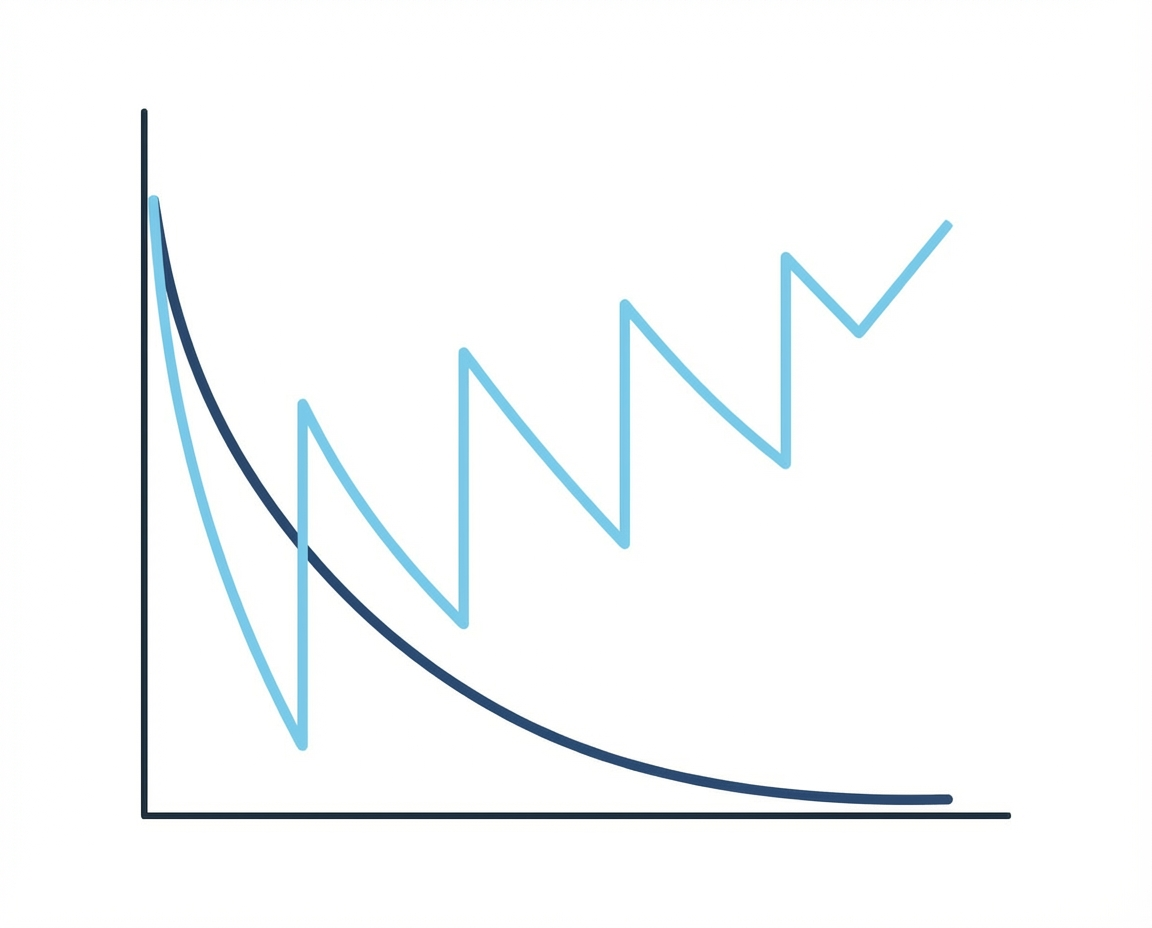
The results were consistent and somewhat depressing. He found that memory does not fade linearly. It drops like a stone.
Within twenty minutes, you lose about forty percent of what you just learned. Within a day, you have lost nearly seventy percent. By the end of the month, without reinforcement, that expensive training session you ran is almost entirely gone.
This is not a defect in the human operating system. It is a feature.
Your brain is an energy-efficient machine. It is constantly bombarded with sensory input. The color of the car next to you. The hum of the air conditioner. The specific phrasing of an email.
If your brain kept everything, it would collapse under the weight of useless data. So, it aggressively deletes anything that it deems unimportant. This process is called synaptic pruning.
The brain decides what is important based on frequency. If you encounter a piece of information once, the neural pathway is weak. Your brain assumes it was a one-off event and clears the path to save energy.
Why Cramming is a Business Risk
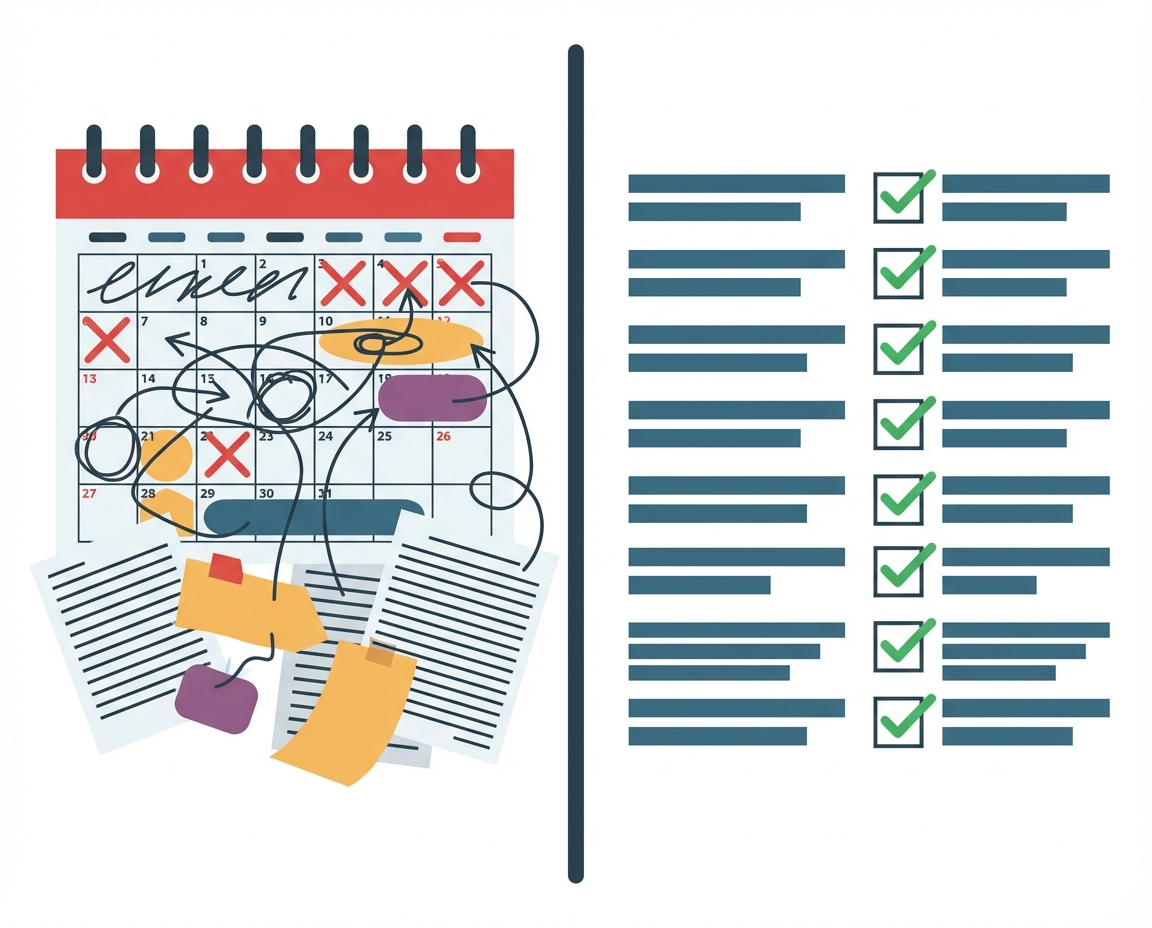
Most corporate training relies on massed practice. This is the academic term for cramming. We group all the learning into a single block of time.
We do this because it feels efficient. It fits neatly on a calendar. We can tick a box that says the team is trained. The employees even feel good about it in the moment because the information is fresh in their short-term working memory.
However, this creates an illusion of competence.
When we force a team member to consume hours of content at once, we are triggering cognitive overload. The brain can only encode a specific amount of information into long-term memory at a time. Once that limit is reached, the rest of the information just bounces off.
This leads to a hidden organizational cost.
Your employees want to do a good job. When they cannot recall the training they received, they feel incompetent. They feel stress. They hesitate to make decisions because they know they should know the answer, but they cannot access it.

The Science of Spacing
There is a better way to learn, and it has been verified by cognitive science for over a century. It is called spaced repetition.
The concept is simple but counterintuitive. You should not review information when you know it well. You should review it at the exact moment you are about to forget it.
Imagine a path through a dense forest. If you walk it once, the grass bends down, but it springs back up the next day. The path disappears.
If you walk it every hour for a day, the path gets downtrodden, but the grass eventually recovers because the roots are still there.
But if you walk that path once a day for a month? The grass stops growing. The earth compacts. A permanent trail is formed.
Every time you struggle to recall a fact and then successfully retrieve it, your brain strengthens the neural connection. It wraps the connection in myelin, a substance that insulates the pathway and makes signals travel faster.
The struggle is the point. The effort of retrieval tells your brain that this information is vital for survival.
How AI Solves the Timing Problem
The challenge for managers has always been logistics. How do you know the exact moment an employee is about to forget a specific piece of information?
You cannot track the forgetting curve of ten different people across fifty different topics manually. It is impossible.
This is where technology shifts the landscape. Artificial intelligence does not need to guess. It can measure.
Modern platforms use algorithms to track individual performance. If a team member answers a question correctly and quickly, the system knows they have mastered that concept. It pushes the next review out by weeks or months.
If they hesitate or answer incorrectly, the system brings that topic back tomorrow. Then in three days. Then in a week.
This is the drip-feed approach. Instead of a firehose of information once a year, it provides a gentle stream of knowledge every day.
It takes only a few minutes. It fits into the gaps of a busy schedule. But the compound effect over a year is staggering.
Building a Culture of Mastery
We often look for complex solutions to business problems. We reorganize departments. We change our mission statements. We buy expensive software suites.
But sometimes the solution is biological. It is about working with the grain of human nature rather than against it.
When you move from cramming to spaced repetition, you are telling your team that you care about their long-term success. You are giving them the tools to actually retain what they learn.
This reduces the fear of not knowing. It lowers the stress of decision making.
It frees up mental energy that was previously spent trying to remember basic facts, allowing your team to focus on higher-level problem solving.
That is how you build a business that lasts. You do not just build a product. You build the people who build the product.
The unknowns in business are vast. We cannot predict the market. We cannot predict the economy. But we can predict how our brains work.
And when we align our systems with that reality, we stop struggling to remember and start using what we know.