What is a Skill Gap Analysis?
You probably spend a significant amount of time thinking about where your business is going. You have a vision for the product, the service, and the impact you want to make. But there is often a nagging worry that keeps you up at night. You might wonder if you actually have the people and the capabilities to get there. This anxiety is normal. It stems from the uncertainty of the unknown.
A Skill Gap Analysis is the systematic process of identifying the difference between the skills your team currently possesses and the skills your business needs to meet its strategic goals. It is not about judging individuals. It is about assessing the collective inventory of your organization. It turns that vague worry into concrete data you can use to make decisions.
Beyond the Basic Definition
Think of this analysis as an inventory check before a long journey. You know your destination, but you need to ensure you have the right supplies to survive the trip. In a business context, these supplies are the technical abilities, soft skills, and leadership traits of your staff.
When you perform this analysis, you are looking for two specific things:
- The Current State: An honest, unbiased map of what your team can do right now.
- The Future State: A specific list of requirements necessary to achieve your 12 to 24 month goals.
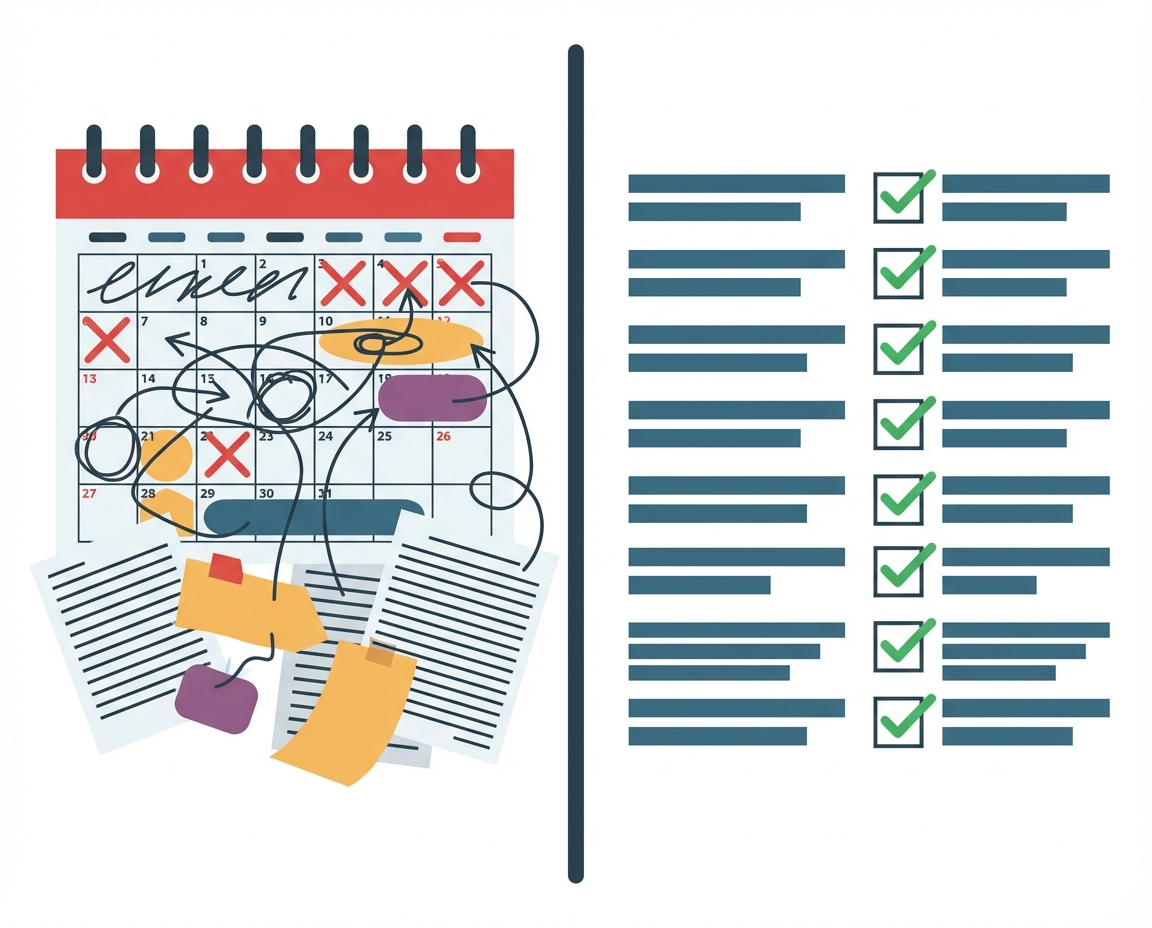
The “gap” is simply the distance between these two points. Once you measure that distance, the fear usually subsides because you finally have a problem you can solve rather than a feeling you have to endure.
Skill Gap Analysis vs. Performance Reviews
It is critical to distinguish between a skill gap analysis and a performance review. Mixing these two creates confusion and fear among your staff. They serve entirely different functions and look at different timelines.
- Performance Reviews: These look backward. They evaluate how well an employee performed their specific duties over the last year. They focus on the individual.
- Skill Gap Analysis: This looks forward. It evaluates what the organization needs to survive the future. It focuses on the role and the collective team structure.
If you treat a gap analysis like a performance review, your team may feel their jobs are threatened because they do not yet know a skill that is required for a future strategy. It is your job to frame this as organizational planning, not individual grading.
The Mechanics of the Assessment
Conducting this analysis does not require expensive consultants or complex software. It requires intellectual honesty and a bit of time. You need to sit down and strip away the titles and personalities to look strictly at capabilities.
Start by listing the critical objectives for the next year. If you plan to introduce AI into your workflow, listing “AI proficiency” is too vague. You need to break it down. Do you need prompt engineering? Do you need Python development? Do you need legal understanding of copyright?
Once you have the list of needs, compare it against your current roster. You will likely find three categories:
- Covered: We have this skill and it is strong.
- At Risk: We have this skill, but only one person knows it.
- Missing: We do not have this capability in house.
When to Conduct the Analysis
Timing is everything. If you do this too often, it becomes bureaucratic noise. If you do it too rarely, you wake up one day unable to compete. There are specific triggers that should prompt this work.
First, consider doing this whenever you shift strategy. If you decide to pivot from service work to a product model, your skill needs change overnight. Second, look at this when you are struggling to hire. Often, managers struggle to hire because they are writing job descriptions based on old roles rather than future gaps.
Finally, this is helpful when the team feels overwhelmed. Burnout often happens not because of volume, but because people are being asked to do things they are not equipped to do. Identifying that gap allows you to provide the training that relieves their stress.
Leading Through the Unknown
As a manager, admitting you do not have all the skills you need can feel like a failure. It is not. It is a sign of maturity. No team is perfectly equipped for a future that hasn’t happened yet.
By engaging in this process, you move from a reactive state to a proactive one. You can decide whether to train your current loyal employees, hire new specialists, or outsource specific tasks. You stop guessing and start building. This creates a culture where your team sees that you are invested in their growth and the stability of the company. It transforms the anxiety of “can we do this?” into the confidence of a clear plan.