What is cmi5 and how it impacts your team training data
You are building a business that you want to last. You care deeply about the people working alongside you and you want to give them the tools they need to succeed. Part of that responsibility involves training and development. But as you navigate the landscape of Learning Management Systems (LMS) and digital courseware, you are likely bombarded with acronyms that seem designed to confuse rather than clarify.
You might feel a sense of unease that you are investing in training tools without fully understanding the underlying technology that reports on your team’s success. That fear of missing a key piece of technical context is common among managers who are experts in their specific industry but not in educational technology. One of the newer terms you need to understand is cmi5. It is not just another buzzword. It is a specific set of rules that helps you get clear, actionable data on how your employees are actually learning.
Understanding the definition of cmi5
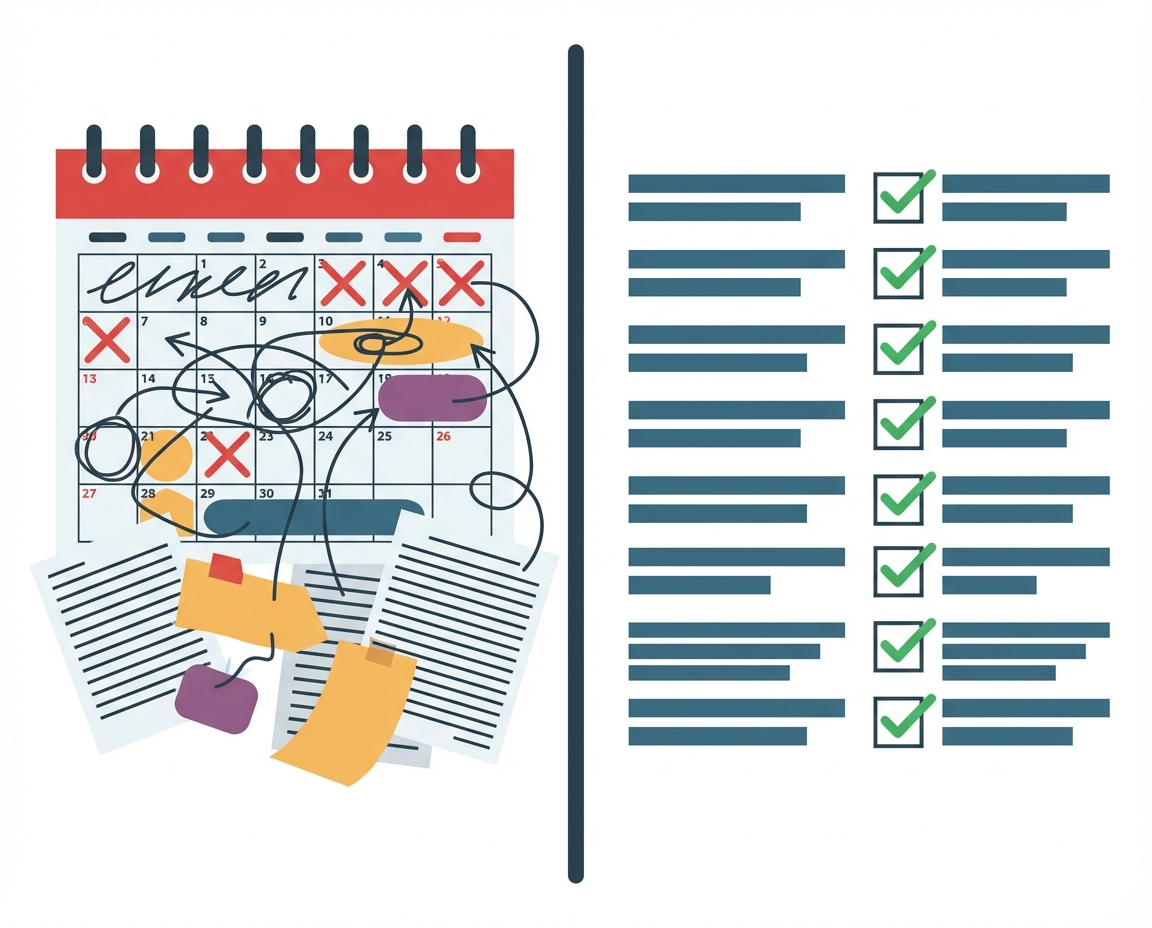
At its core, cmi5 is an interoperability standard. In the world of eLearning, standards are what allow a training course created by one vendor to play correctly on an LMS created by a different vendor. For decades, the industry relied on a standard called SCORM. While reliable, SCORM was built for a desktop computer era that no longer exists.
Then came xAPI, a highly flexible language that could track learning anywhere, even outside of a formal course. However, xAPI was almost too flexible. It lacked the rigid rules needed to easily report progress back to a traditional LMS. This is where cmi5 comes in. It serves as a bridge. It utilizes the robust data capabilities of xAPI but wraps them in a set of strict rules defined specifically for LMS integration. It ensures that the rich data xAPI collects can be easily read, stored, and reported by your management system.
Comparing cmi5 to the legacy SCORM standard
To understand why cmi5 matters to your bottom line, you have to look at what came before it. SCORM was the gold standard for years, but it has significant limitations that may be hindering your view of team performance.
- Device dependency: SCORM struggles with modern mobile devices and changing screen sizes.
- Connectivity: SCORM requires a constant internet connection. If an employee is training on a flight or in a remote area and the connection drops, the data is often lost.
- Data depth: SCORM essentially tells you if someone started a course and if they passed or failed. It rarely tells you how they learned.
Move beyond simple pass or fail.
cmi5 resolves these friction points. It is designed to work seamlessly across mobile devices. It allows for distributed learning, meaning content does not have to reside on the LMS server itself to be tracked. Most importantly for a distributed workforce, it supports offline learning. An employee can complete a module without internet access, and the data will sync automatically once they reconnect. This removes a significant barrier for teams that are not desk bound.
The relationship between cmi5 and xAPI
You might wonder why you cannot just use xAPI if it is the underlying technology. Think of xAPI as a vast dictionary of words. You can use those words to write a poem, a technical manual, or a grocery list. Because xAPI is so broad, an LMS often struggles to understand the context of the data coming in.
cmi5 acts as the grammar guide for that dictionary. It dictates exactly how xAPI should be used when the goal is launching a course from an LMS. It defines:
- How the course is launched and authorized.
- How the course communicates completion status.
- How the session is terminated.
By constraining xAPI to these specific rules, cmi5 ensures that you get the detailed behavioral data of xAPI without the technical headache of custom integration.
Why cmi5 matters for management decisions
As a manager, you want to move beyond simple compliance checking. You want to know if your team is engaging with the material. cmi5 opens the door to more sophisticated analytics. Instead of just seeing that an employee passed a quiz, you might see that they referenced a specific video module three times before answering. This indicates a knowledge gap that you can help address through coaching.
Adopting systems that support cmi5 is about future proofing your operations. It allows you to deliver content on the devices your team actually uses while ensuring you still have the oversight necessary to guide their professional growth. It removes the guesswork from training metrics and replaces it with reliable, structured data.