






What is Mobile-First Microlearning for Operations?
The production floor is moving at a steady rhythm until suddenly it stops. There is a specific kind of silence that happens when a critical piece of machinery fails. As an operations manager, you feel that silence in your chest. Your team looks to you for a solution, and the pressure to minimize downtime is immense. You want to be the person who empowers your staff to fix the problem, but the information you need is often buried in a three hundred page manual that no one has looked at in years. This is where the concept of mobile-first microlearning enters the picture. It is a shift from front-loading information to providing it exactly when it is required.
Microlearning refers to the practice of delivering educational content in small, specific, and highly focused bursts. When we add the mobile-first component, we are talking about information designed specifically for a smartphone or tablet. This is not just a PDF of a manual viewed on a small screen. It is a reimagined way of sharing knowledge that assumes the user is standing in front of a machine, possibly in a noisy or high-pressure environment, and needs a specific answer right now.
Defining Mobile-First Microlearning for Technical Needs
At its core, this approach breaks down complex technical processes into digestible units. Instead of a broad course on industrial maintenance, a microlearning module might focus exclusively on how to clear a specific jam or how to reset a particular sensor. The goal is not to turn every employee into a master engineer. Instead, it is to provide the exact technical instruction needed to complete a task at hand.
- Content is usually restricted to a single learning objective.
- Modules are typically between one and five minutes long.
- The format prioritizes visual aids like short videos or annotated photos.
- Navigation is intuitive and requires minimal clicking to find answers.
Just-in-Time Technical Instructions and the Point of Need
Traditional training assumes that we can learn everything we need to know before we start the job. However, the human brain is not built to retain thousands of specific technical steps that are only used once every six months. Just-in-time delivery acknowledges this reality. It provides the instruction at the point of need.
By placing QR codes on equipment or having a searchable mobile database, a manager can ensure that the right information is accessible within seconds. This reduces the cognitive load on the manager and the staff. You no longer have to worry if you missed a key piece of information during a training session last year. The information is waiting for the moment it is actually useful.
Microlearning Versus Comprehensive Operations Manuals
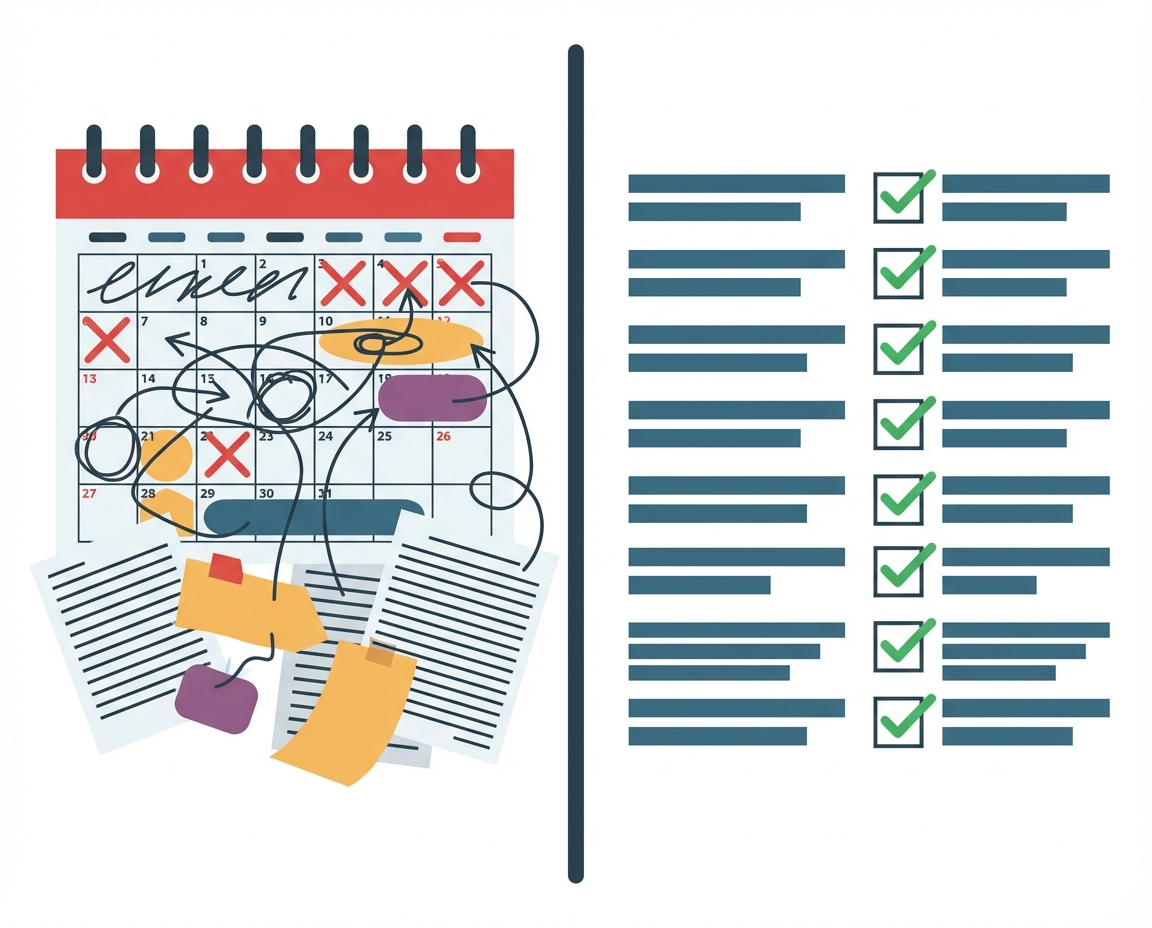
It is helpful to compare this approach to the traditional comprehensive manual. A manual is designed to be exhaustive. It covers the history of the machine, every possible configuration, and deep theoretical concepts. While this is important for a deep understanding, it is often a barrier during an operational crisis.
- Manuals are for reference; microlearning is for action.
- Manuals require searching; microlearning provides answers.
- Manuals stay in the office; microlearning stays in the pocket.
There is a fundamental difference between knowing how a machine works and knowing how to fix a specific error code. The former is about education, while the latter is about performance support. For a busy manager, performance support is the tool that de-stresses the workday.
Scenarios for Implementing Microlearning in the Factory
There are several scenarios where this approach provides immediate relief to a manager. Consider a shift change where a new operator is unsure of the startup sequence. Instead of calling you at home, they scan a code and watch a forty second video of the correct sequence.
Another scenario involves routine maintenance that happens infrequently. If a filter needs to be changed every ninety days, it is unlikely the team will remember the exact steps. A quick microlearning checklist ensures the task is done correctly without requiring your direct supervision. This empowers the team and builds their confidence, which in turn allows you to focus on growing the business rather than micromanaging repairs.
The Unknowns of Just-in-Time Learning
While this method offers clear benefits, there are still questions that researchers and managers are exploring. One major unknown is how this affects long-term skill development. If a team member always relies on a digital guide, do they ever truly master the equipment? There is a risk that we are creating a workforce that can follow instructions but cannot troubleshoot unique problems that fall outside the digital library.
- Does reliance on microlearning decrease critical thinking skills?
- How do we ensure technical content is updated as fast as the equipment?
- What happens when the technology providing the microlearning fails?
As you navigate your role, these are the questions to keep in mind. Building a solid, remarkable business means finding the balance between immediate efficiency and the deep, diverse knowledge of your people. Using these tools to alleviate daily pain is a step toward that balance.