What is Onboarding?
You spent weeks reviewing resumes. You conducted multiple rounds of interviews. You finally made an offer and the candidate accepted. The relief you feel is palpable because you finally have help on the way. But that relief often shifts quickly to a new and specific type of anxiety. Now that you have this talented person on your team how do you ensure they actually succeed? You are likely worried about them feeling lost or realizing that your internal processes are not as polished as they appeared during the interview.
Many business owners assume the hard work ends when the contract is signed. The reality is that the most fragile period of employment is the beginning. This brings us to the concept of onboarding. It is the systemic approach to taking a talented outsider and turning them into a confident insider. It is how you transfer your passion and your operational knowledge to someone else so they can help build what you have started.
Understanding Onboarding
Onboarding is the continuous process of integrating a new employee with a company and its culture. It serves two primary functions. First it provides the logistical tools and information needed for the employee to do their job. Second it facilitates the social and cultural connections that make the employee feel like a true member of the organization.
This is not merely about productivity. It is about psychological safety. A new environment is stressful. Onboarding reduces that stress by providing a map of the territory. It answers the questions a new hire is afraid to ask. By clearly defining roles and expectations you allow the new hire to focus their energy on learning the work rather than navigating office politics or guessing what success looks like.
Onboarding vs. Orientation
It is common to confuse onboarding with orientation but they are distinct concepts with different goals. Understanding the difference is vital for a manager trying to build a lasting structure.
- Orientation: This is an event. It usually happens on the first day or week. It involves paperwork, setting up payroll, assigning a laptop, and showing the employee where the restrooms are.
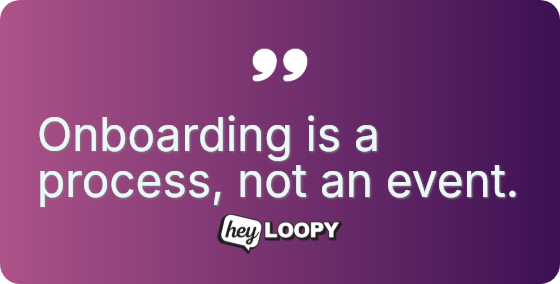
- Onboarding: This is a process. It can last anywhere from a few weeks to a year. It involves mentoring, regular feedback loops, understanding the company vision, and mastering specific workflows.
If you stop at orientation you get an employee who is on the payroll but not fully engaged. Onboarding bridges the gap between administrative compliance and actual performance.
The Role of Cultural Integration
Technical skills are often what gets a person hired. Cultural fit is usually what determines if they stay. Onboarding is the primary mechanism for cultural transfer. As a business owner you have a specific way you view your customers and your mission. You cannot expect a new hire to absorb this through osmosis.
During this phase you must explicitly share the values that drive your decisions. This involves:
- Explaining the history of the company and why it exists.
- Walking through past challenges and how the team overcame them.
- Defining behavioral norms and communication styles.
When a new hire understands the ‘why’ behind the work they can make autonomous decisions that align with your vision. This is how you scale yourself as a manager.
Structuring the Timeline
Effective onboarding requires a plan. It is scientific in nature because it requires a hypothesis about what a person needs to know and a method for delivering that knowledge. A standard approach involves breaking the process into time-based milestones.
- The First 30 Days: Focus on learning. The goal is small wins and understanding the landscape. They should be soaking up information.
- The First 60 Days: Focus on contribution. The employee begins to take on limited responsibilities and collaborates with the wider team.
- The First 90 Days: Focus on independence. By this stage the employee should be executing tasks with minimal supervision and suggesting improvements.
Unanswered Questions
There is no single correct way to onboard because every business is unique. As you look at your own organization there are questions you must ask yourself to tailor this definition to your reality.
How long does it actually take for someone to become fully productive in your specific industry? Are you confusing a lack of skill with a lack of guidance? How do you measure if an employee feels integrated or isolated? These are the variables you must test and refine as you build a company that lasts.