What is Storyboarding in Training Development?
You know that sinking feeling when you try to explain a complex new process to your team and blank stares stare back at you. You spent hours building a slide deck or recording a video, yet the message did not land. The frustration is real. You worry that you are not equipping your people with the tools they need to succeed. The problem is rarely the information itself but rather how that information is structured and delivered.
This is where the concept of storyboarding comes in. It is not just for movie directors or animators. It is a critical tool for any business leader who needs to transfer knowledge effectively.
What is Storyboarding in a business context
Storyboarding is the act of creating a visual organizer that plans the narrative and sequence of a learning experience. Think of it as the architectural blueprint for a house. You would not pour concrete before you knew where the walls were going to go. Similarly, you should not open your presentation software or recording tools until you have mapped out exactly what needs to happen.
In the realm of instructional design, a storyboard details several key elements before any development begins:
- The specific text or script the learner will read or hear
- The visual assets required for that specific moment
- The interactions or buttons the user needs to click
- The logic of where the learner goes next
It moves the abstract ideas swirling around in your head onto paper or a digital document. It makes the intangible tangible so you can critique it before you have invested significant time in building it.
Why Storyboarding matters to a busy manager
Time is your scarcest resource. There is a fear among many owners that planning takes too long. They want to rush to the finish line because there is so much work to do. However, skipping the storyboard phase often leads to scope creep and endless revisions.
When you skip this step, you often find yourself halfway through creating a training module only to realize the flow makes no sense. Then you have to tear it down and start over. That is painful. That causes stress.
By using a storyboard, you can catch logic errors early. You can see gaps in your explanation. You can share the rough outline with a trusted colleague to see if it makes sense to them. It is much cheaper and faster to erase a sentence on a storyboard than it is to re-record a video or re-code a learning module.
Storyboarding compared to outlining
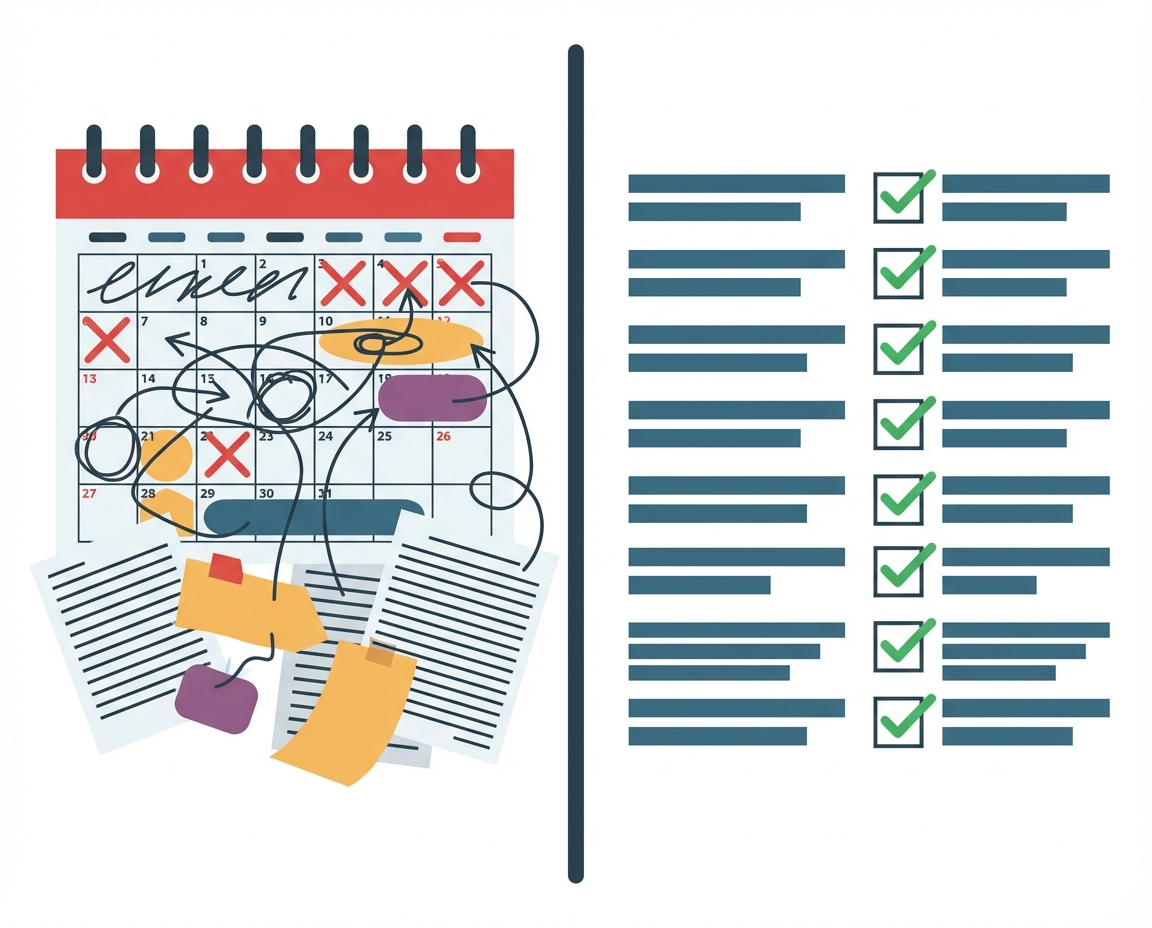
You might wonder if a simple outline is enough. While an outline covers the hierarchy of information, it misses the user experience. An outline is a list of facts. A storyboard is a simulation of the journey.
- Outlining focuses on what you are saying.
- Storyboarding focuses on how the team experiences what you are saying.
If you are only writing a policy document, an outline works. If you are trying to change behavior or teach a skill, you need to visualize the sequence of events. You need to verify that the visual matches the audio and that the pacing feels right for a human being who might be hearing this for the first time.
When to use Storyboarding
You do not need a storyboard for a five minute update at a staff meeting. However, there are specific scenarios where this discipline is vital for your peace of mind and the success of your team.
Consider storyboarding when the stakes are high. If you are rolling out a new safety protocol or a fundamental shift in your sales strategy, clarity is non-negotiable.
- Complex Technical Training: When steps must be followed in a specific order.
- Compliance Training: When you must prove that specific information was covered accurately.
- Onboarding: When you are trying to create a welcoming and consistent first impression for new hires.
Creating clarity in a chaotic environment
The goal here is not to add more paperwork to your desk. The goal is to give you confidence. When you look at a completed storyboard, you know exactly what you are going to build. You eliminate the guesswork.
It allows you to step back from the weeds of production and think like a teacher. It forces you to ask difficult questions. Is this slide necessary? Does this image actually help explain the concept? Are we overwhelming the employee with too much text?
By addressing these unknowns on paper first, you protect your time and you honor the time of your staff. You ensure that when they sit down to learn, the path is clear.