What is Time Blocking?
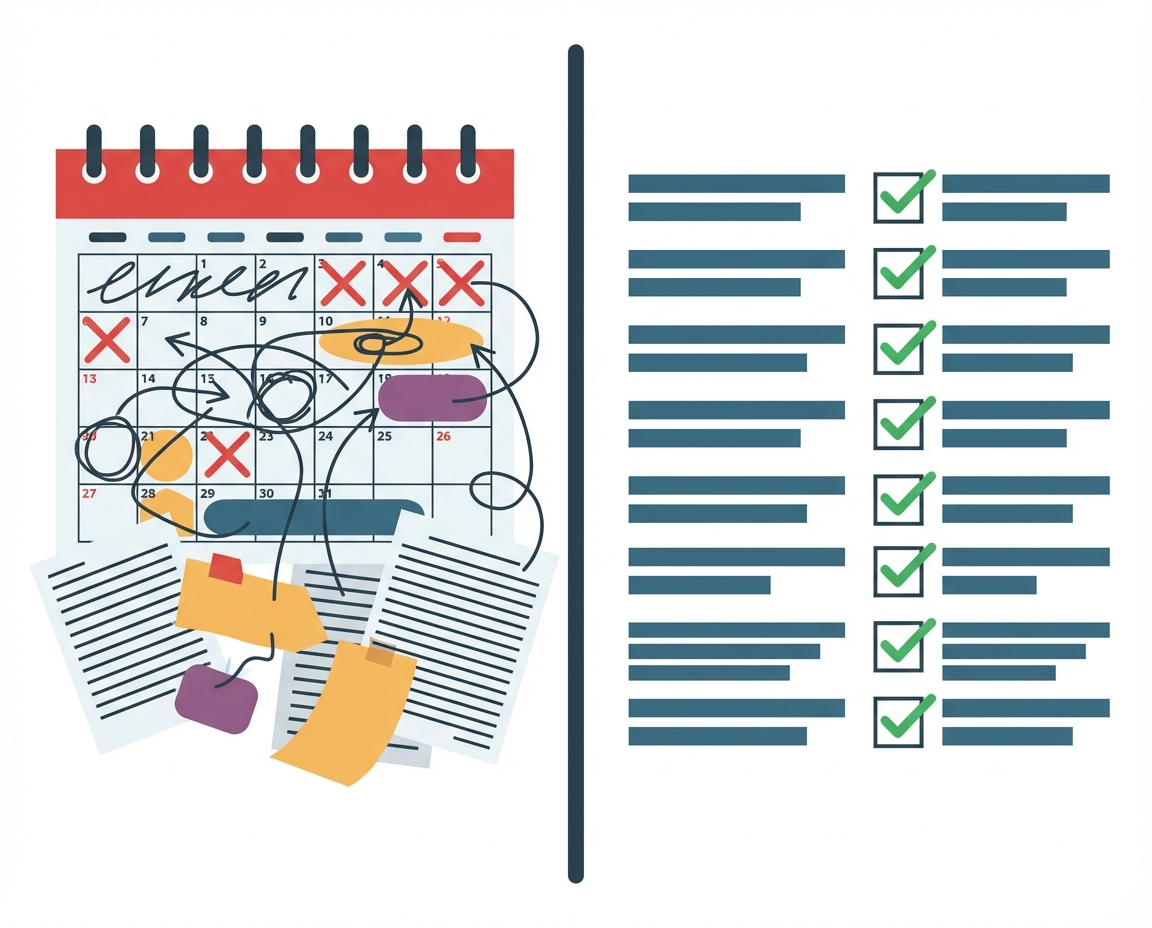
You stare at your calendar and it looks like a battlefield. Between the meetings you have to attend, the fires you have to put out, and the endless stream of emails, the actual work of building your business often gets pushed to the margins. You might reach the end of a fourteen hour day exhausted but feeling like you accomplished nothing of substance. This is a common pain point for founders and managers. The issue is rarely a lack of effort. It is usually a lack of protected space for high value thinking.
Time blocking is a time management method that asks you to divide your day into distinct blocks of time. Instead of keeping an open ended to do list, you assign a specific window of time to a specific task or group of tasks. During that block, you focus only on that designated item. You do not check email. You do not answer the phone. You do not switch contexts. You simply do the work assigned to that hour.
The Mechanics of Time Blocking
The core premise of time blocking is the transition from a task based mindset to a time based mindset. Most managers operate from a to do list. They look at the list, pick an item, and work on it until it is done or until they get interrupted. This method is reactive.
Time blocking requires you to be proactive. You must look at your week in advance and allocate hours to your priorities before the rest of the world encroaches on your time. This typically involves:
- Reviewing your top priorities for the week.
- Estimating how long each task will realistically take.
- Slotting those tasks into your calendar like appointments.
- Grouping similar small tasks, like email or Slack responses, into a single block.
This approach forces you to confront the reality of a finite day. You can write down infinite tasks, but you only have a set number of hours. Time blocking makes you choose what matters most.
Time Blocking vs. Simple To-Do Lists
The primary difference between time blocking and a standard checklist is the element of commitment. A list is a graveyard of good intentions. It lacks urgency and context. Without a specific time attached to a task, a phenomenon known as Parkinson’s Law takes over. This states that work expands to fill the time available for its completion. If you have all day to write a strategy document, it will take all day.
Time blocking imposes artificial deadlines. By giving yourself only ninety minutes to complete a budget review, you are more likely to focus intensely and finish it within that window. It removes the ambiguity of “I will get to this later” and replaces it with “I am doing this at 2:00 PM.”
Addressing Decision Fatigue
One of the most exhausting parts of management is constant decision making. Every time you finish a task, you have to decide what to do next. This burns cognitive energy. By the afternoon, your ability to make quality decisions degrades.
Time blocking separates the planning function from the execution function. You make all your scheduling decisions at once, usually at the start of the week or the night before. When you show up to work, you do not have to waste energy wondering what to do. You simply follow the plan you already created for yourself. This preserves your mental energy for the actual work of building your business.
Challenges and Reality Checks
While the logic is sound, the reality of running a business is messy. Employees have emergencies. Clients call with urgent issues. A rigid schedule can shatter under the pressure of a real operating environment. It is critical to ask yourself how much control you actually have over your day.
To mitigate this, successful managers often use a variation called flexible time blocking. This involves:
- Leaving empty buffer blocks between focused work sessions to handle the unexpected.
- designating office hours where you are available for interruptions.
- Reviewing the schedule at midday to adjust for new information.
The goal is not to create a prison of minute by minute accounting. The goal is to ensure that the tasks that will actually grow your business have a reserved seat at the table.