Transitioning to a Skills Based Organization for Modern Managers
Building a business is an exercise in managing uncertainty. You started this venture because you saw a gap in the world and believed you could fill it with something meaningful. Now, as the team grows, you face the friction of traditional management structures. You might feel that your current job descriptions are too rigid or that your hiring process is missing the mark. The stress of feeling like others have more experience can be heavy, but the reality is that many traditional models are no longer sufficient for the pace of modern work. Moving toward a skills based organization is a path to clarity. It allows you to see your team not just as a collection of titles, but as a dynamic pool of capabilities. This shift helps you allocate the right people to the right problems while reducing the personal stress of organizational guesswork.
The Transition to a Skills Based Organization
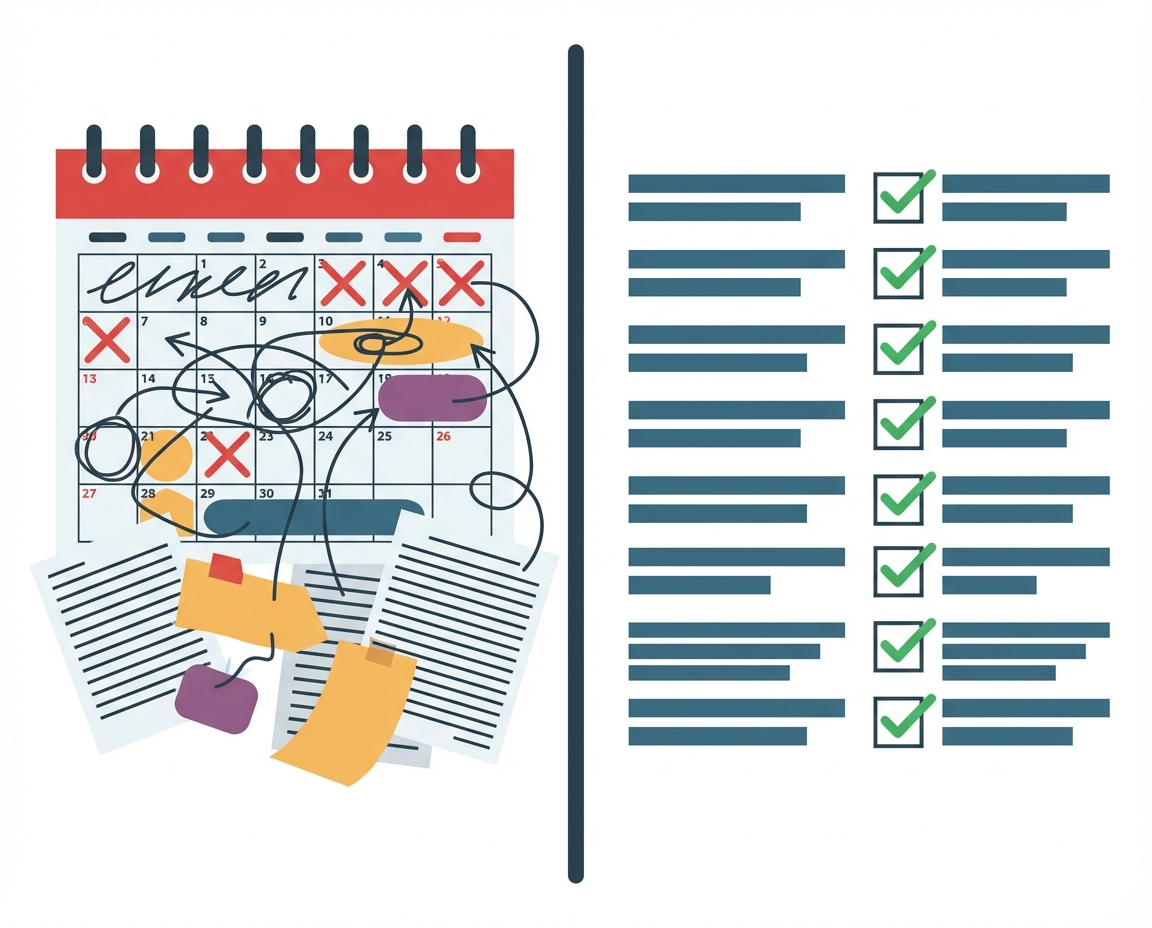
In a traditional hierarchy, people are often confined to the boxes drawn on an organizational chart. A manager might hire a Marketing Coordinator because that is the standard title, yet the actual needs of the business might require a mix of data analysis, graphic design, and copywriting. When we shift to a skills based model, we stop looking at the box and start looking at the tasks. This transition requires a fundamental change in how we perceive work. It is about deconstructing roles into their component skills and then mapping those skills to the goals of the company. This approach provides several benefits:
- It increases organizational agility by allowing people to move between projects based on what they can do.
- It identifies hidden talents within your existing staff that might be overlooked in their current roles.
- It creates a more equitable environment where merit is based on proven capability rather than tenure or previous titles.
However, this transition is not without its questions. How do we accurately measure a skill without over-complicating the process? Can a business maintain a sense of stability when roles are fluid? These are the questions managers must navigate as they move away from the safety of the old ways.
Identifying the Capabilities Within Your Team
The first step in this journey is a comprehensive audit of what your people actually know. Most managers find that their team members possess skills that are never utilized because they were never asked for. To build a solid foundation, you must create an inventory of capabilities. This is not a one-time event but a continuous process of discovery. You can start by:
- Conducting skills self-assessments where employees list their proficiencies and interests.
- Observing cross-functional collaboration to see who steps up in specific technical or creative areas.
- Reviewing past project successes to identify the specific competencies that drove those results.
By gathering this information, you start to see the gaps in your organization. You might find that you have an abundance of strategic thinkers but a lack of technical executors. This clarity allows you to make informed decisions about training and hiring rather than relying on gut feelings or vague job descriptions. It moves you from a state of worry to a state of data-driven confidence.
Deconstructing Traditional ID and Training
As you look to develop your talent pipeline, you will eventually encounter the field of instructional design. Traditional instructional design often focuses on long, comprehensive courses meant to cover every possible scenario. For a busy manager, this often feels like a slow and expensive way to move the needle. When we deconstruct these traditional methods, we find that much of the time spent in training development is focused on the wrong things. The goal of training in a skills based organization should be the rapid acquisition of specific, applicable knowledge. We must ask if our current training methods are helping us build a remarkable business or if they are simply a box-ticking exercise that drains our resources.
Addressing the Choose Your Own Adventure Fallacy
One of the most common pitfalls in modern instructional design is what we call the Choose Your Own Adventure Fallacy. This refers to the creation of complex, branching scenarios where learners make choices that lead to different outcomes. While this sounds engaging and interactive on the surface, the development time required for these scenarios is immense. Designers spend weeks or months mapping out every possible wrong turn a student might take. We must challenge this branching complexity and ask a difficult question. Does the return on investment justify the effort?
In most business environments, a linear, high-impact case study provides the same learning outcome for a fraction of the cost. A linear approach allows you to:
- Deliver information faster to the people who need it now.
- Focus on the gold standard of performance rather than documenting every possible failure.
- Update content easily as your business goals and technologies evolve.
When you are building something that lasts, you cannot afford to get bogged down in over-engineered training models. The goal is to get your team from point A to point B with the least amount of friction. We should wonder if the push for branching scenarios is more about the designer’s desire for complexity than the learner’s need for clarity.
Rethinking the Hiring and Promotion Process
When your focus shifts to skills, your hiring process must follow suit. Traditional hiring relies heavily on credentials, which are often proxies for skill rather than evidence of it. To build a resilient organization, you should look for specific competencies. This means moving toward a hiring model that includes:
- Skill based assessments or work samples that demonstrate actual ability.
- Structured interviews focused on how a candidate solved specific technical or managerial problems.
- A focus on the ability to learn and adapt, which is perhaps the most valuable skill of all.
Promotion also changes in this model. Instead of promoting the person who has been there the longest, you promote the person who has acquired the skills necessary for the next level of leadership. This provides a clear path for employees who want to grow and ensures that your management team is technically and emotionally equipped for their roles. It removes the uncertainty of wondering if a new hire will work out by focusing on what they can actually do from day one.
Allocating Employee Skills to Tasks Efficiently
Efficiency in a skills based organization comes from the precise matching of talent to tasks. When you have a clear map of your team’s capabilities, you can assemble project teams with surgical precision. This prevents the common problem of over-burdening your top performers with tasks that others could handle if given the opportunity. Efficient allocation looks like:
- Breaking down large projects into specific skill requirements.
- Assigning tasks based on who is best suited for the work, regardless of their department.
- Using project management data to see where certain skills are consistently in high demand.
This approach helps you de-stress because you are no longer guessing who should do what. You have a system that supports your decisions. It also empowers your team, as they get to work on things they are good at and things that help them grow. This is how you build a solid, high-functioning organization that can weather the complexities of the market.
Continuous Learning and the Retention Strategy
Retention is the final piece of the puzzle. People stay at companies where they feel they are becoming better versions of themselves. In a skills based organization, learning is part of the daily workflow. It is not something that happens once a year at a conference. It is a continuous loop of application and feedback. By providing clear guidance and best practices, you help your team gain confidence. This confidence leads to a sense of ownership over their work and their career path.
We do not yet know the limit of how far a skills based approach can take a small business, but we do know that the old way is becoming increasingly difficult to maintain. As you continue to build your venture, keep asking yourself if you are managing for the title or managing for the skill. The answer will determine how effectively you can grow and how much impact your business will ultimately have on the world.