You’re Training Digital Natives With Analog Methods
Your newest hire grew up learning guitar from YouTube, picking up Spanish on Duolingo during their commute, and mastering complex video games through trial, feedback, and repetition - all without reading a manual.
Then they showed up for their first day at your company and you handed them a binder.
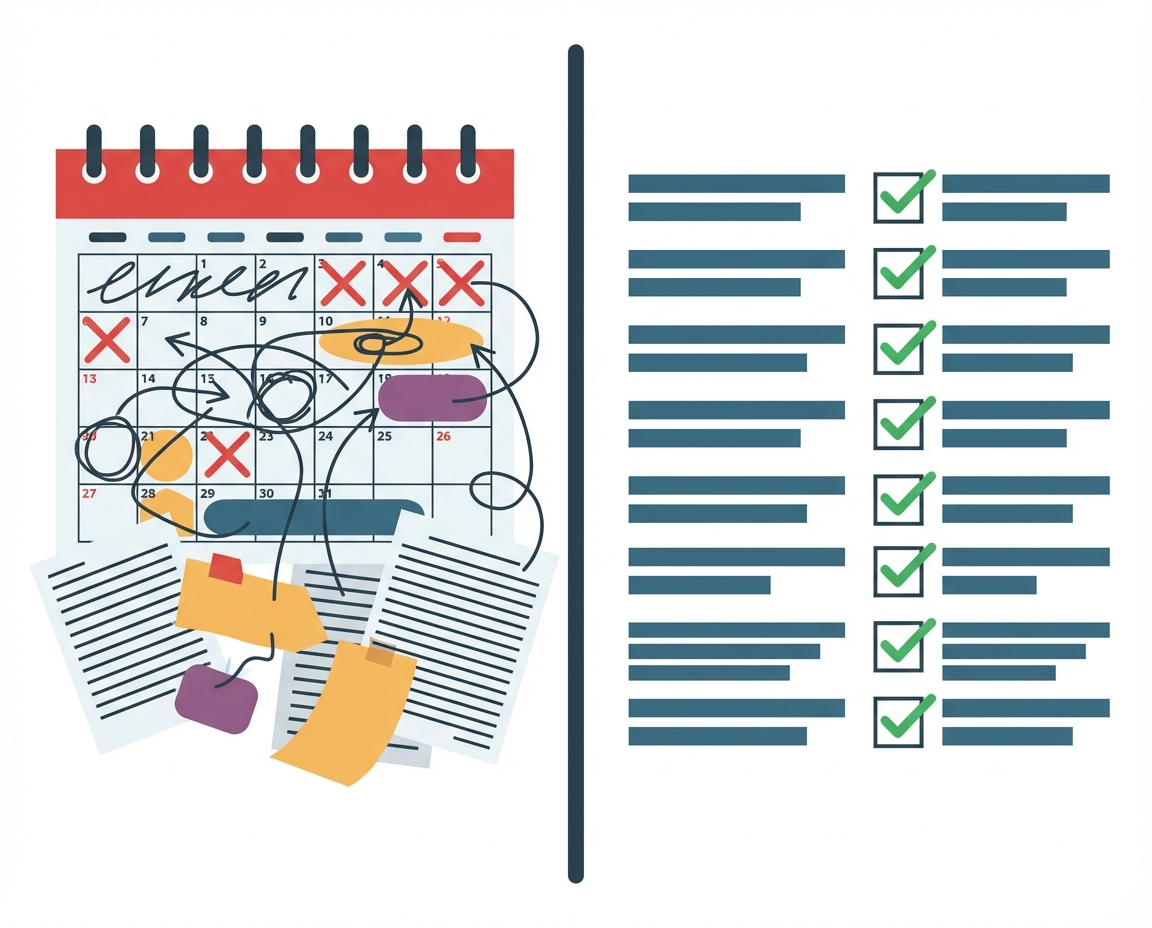
Or worse - a four-hour PowerPoint, a shared drive link with 47 folders, and a suggestion to “shadow Sarah for the first two weeks.” They smiled, nodded, and started quietly wondering if they made the right career decision.
This isn’t a generational attitude problem. It’s a delivery method mismatch. The fastest-learning generation in history is being trained with the slowest methods available.
67%
Of training is "tech-based" - mostly video calls with slides
46%
Of Gen Z say they learn best via self-directed methods
6 min
Avg. attention span for passive content - down from 12 min
The Engagement Cliff Is Real - and It’s Getting Steeper
L&D teams are watching a troubling pattern emerge with each new hiring cohort: training completion rates drop, satisfaction scores are polite but flat, and the real learning happens through workarounds - Googling, asking peers on Slack, or just figuring it out through trial and error.
The instinct is to blame the learner. They don’t take training seriously. They have short attention spans. They want everything handed to them.
But consider what these same people do outside of work. They spend hours learning complex skills - coding, cooking, photography, investing, fitness routines - through platforms that are interactive, on-demand, adaptive, and feedback-rich. They don’t lack the ability or desire to learn. They lack patience for learning experiences that feel like a waste of their time.
And honestly? They’re right.
A four-hour onboarding lecture covers material that could be delivered in focused 10-minute sessions over two weeks - with better retention, less time away from productive work, and actual verification that the learning stuck. We’ve known this from cognitive science for decades. The research on spaced repetition and active recall is not new. What’s new is that a generation of workers has been trained by consumer apps that already use these principles - and now they walk into workplaces that don’t.
McKinsey’s 2025 research on the future of development confirms the disconnect: employees are “feeling overwhelmed, fatigued by constant change, and unsupported in their development” - even as organizations invest more than ever. The problem isn’t effort or budget. It’s delivery.
The apps that shaped a generation's learning expectations
Duolingo: 5-minute daily sessions, streaks, instant feedback, adaptive difficulty. YouTube: On-demand, searchable, visual, self-paced. TikTok: Micro-content, pattern-based learning, algorithmic personalization. Video games: Progressive difficulty, immediate consequences, mastery-based advancement. Every one of these platforms uses principles that corporate training ignores: short sessions, active engagement, immediate feedback, and personalized pacing.
“Technology-Based” Training Isn’t the Answer - It’s the Same Problem on a Screen
The ATD State of the Industry report shows that 67% of learning hours are now delivered through technology. That sounds modern. But most of it is instructor-led virtual classrooms - the same lecture format, moved to a video call. It carries the same scheduling overhead, the same passive delivery, and the same marginal cost structure as the classroom training it replaced.
True self-paced e-learning accounts for just 30% of learning hours used. And much of that is click-through modules that test nothing and teach less - the digital equivalent of handing someone a binder and asking them to initial each page.
Moving training to a screen is not the same as rethinking training for people who live on screens.
What digital natives expect is what good consumer learning apps already deliver:
- On-demand access - not scheduled sessions that conflict with actual work
- Bite-sized content - not 90-minute modules that feel like punishment
- Active engagement - questions, scenarios, and practice - not passive consumption
- Instant feedback - knowing immediately what you got right and what needs work
- Adaptive pacing - moving faster through material you already know, spending more time where you’re weak
- Progress that feels real - visible skill building, not a completion percentage on a dashboard they’ll never check
This isn’t about catering to preferences. It’s about using delivery methods that actually work - methods that align with decades of cognitive science on how humans retain and apply information.
The Retention Problem Nobody Talks About
Here’s the connection most organizations miss: employees who feel undertrained are more likely to leave.
New hires form their opinion about an organization within their first 90 days. When the onboarding experience feels outdated, disorganized, or like an afterthought, the message is clear: this company doesn’t invest in its people. For a generation that ranks “growth opportunities” as their top criterion for staying at a job, that signal is devastating.
The irony is that most organizations are investing heavily - $1,280 per employee per year, on average. They’re just investing in delivery methods that their newest employees experience as low-effort and low-value. The budget is there. The intent is there. The experience falls short.
What’s Inside the Full Brief
This brief explores the generational training gap in depth and offers a practical framework for modernizing training delivery without scrapping your existing content:
- The expectation audit - A diagnostic for evaluating how your current training delivery maps against modern learning expectations (with a scoring rubric)
- Five principles from consumer learning apps that corporate training must adopt - and how each one maps to measurable outcomes
- The real cost of the engagement cliff - How to connect declining training engagement to turnover, ramp time, and performance metrics your leadership team already tracks
- The content you already have is enough - Why the problem isn’t what you’re teaching but how you’re delivering it, and how AI-powered platforms transform existing documents into interactive, adaptive training
- Case pattern: onboarding reimagined - What a first-week experience looks like when it’s built for how digital natives actually learn (side-by-side comparison with traditional onboarding)
- Making the shift without starting over - A phased approach to modernizing training delivery that works alongside your existing LMS, not against it
- The 30-day pilot - A step-by-step plan for testing modern delivery methods with one team, measuring the difference, and building the case for broader adoption