You Are the Training Bottleneck
You didn’t sign up to be a full-time trainer. But somewhere between managing performance, running projects, and fielding Slack messages, you became one. The same onboarding walkthrough. The same product explanation. The same “how does this process work?” question from every new hire - and sometimes from people who’ve been on the team for months.
It’s not their fault. They were given a shared drive link, a 90-slide onboarding deck, and a buddy who was too busy to actually help. So they come to you. Again.
The average manager spends 3.5 hours per week answering questions that a well-designed training system would handle. That’s 180 hours a year - more than four full work weeks - spent being a human FAQ.
6–8 mo
Avg. time for a new hire to reach full productivity
180 hrs
Manager time lost per year to repetitive training
70%
Of workplace learning happens informally - unmeasured
Every team has one - the person who knows where everything is, why the process works that way, and what to say when the client asks the hard question. They’re your top closer, your senior engineer, your most trusted CSM.
Their knowledge is your team’s competitive advantage. And it lives entirely in their head.
When they go on vacation, things slow down. When they leave, things break. You’ve seen it happen. The playbook they were supposed to document never got finished. The “quick walkthrough” they recorded eight months ago is already outdated. The tribal knowledge that made your team effective walks out the door with them.
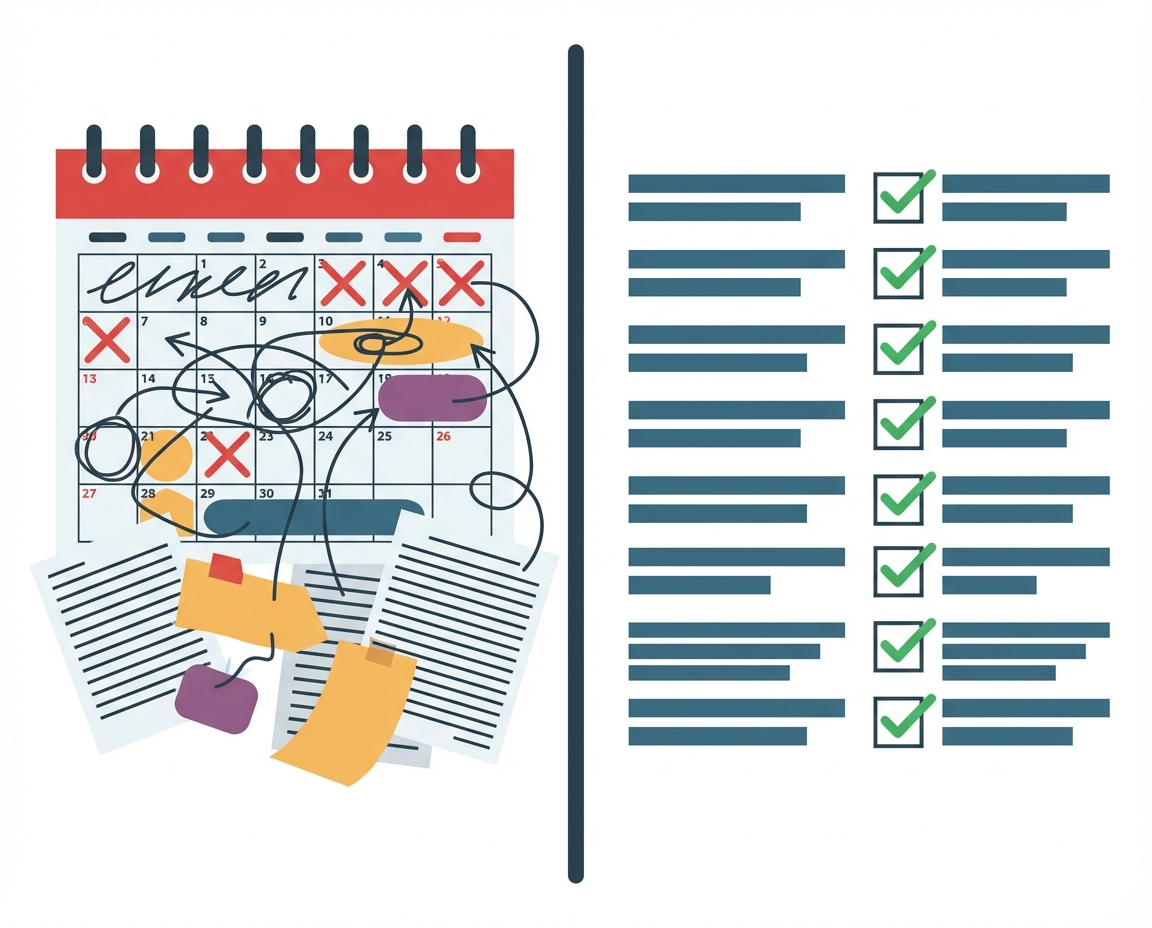
This isn’t a documentation problem. You’ve tried documentation. The wiki has 200 pages that nobody reads. The process doc was last updated in 2024. What you need isn’t another artifact that sits in a folder. You need a system that actively transfers knowledge - one that tests, reinforces, and confirms that the person on the receiving end actually absorbed it.
Most teams have playbooks. SOPs. Process docs. Runbooks. Call scripts. The content exists. The problem is the gap between having it written down and having your team actually perform it consistently.
Consider how your current training works:
- New hire joins
- They’re given access to a shared drive / wiki / LMS
- They shadow someone for a few days
- They start doing the job, figuring it out as they go
- They come to you with questions for the next 3–6 months
The content was available. The learning didn’t happen. Because passive access to information is not training - it’s hoping.
The real cost of slow ramp
A sales rep with a $500K annual quota who takes 8 months instead of 3 months to ramp represents $208K in delayed revenue. A customer success manager who takes 6 months to learn the product drives higher churn during their entire ramp period. These aren't training costs - they're business costs that show up on every team leader's scorecard.
What “AI-Powered Training” Actually Means (Not a Chatbot)
When people hear “AI training,” they picture a chatbot that answers questions. That’s a search engine with a personality. It’s useful, but it doesn’t train anyone.
AI-powered training means something fundamentally different:
It’s active, not passive. Instead of hoping people read the playbook, the system engages them with questions, scenarios, and challenges drawn directly from your actual content. It doesn’t wait for someone to ask - it initiates.
It adapts to each person. The new hire who’s struggling with product knowledge gets more reps on product knowledge. The experienced rep who needs to learn a new process gets just that - no sitting through basics they already know.
It proves competency, not completion. “Completed the module” means someone clicked through slides. “Demonstrated proficiency” means they can actually do the thing. An AI coach tests for the second one.
It works in minutes a day. Not four-hour training blocks that pull people off the floor. Five to ten minutes of focused practice, spaced over time, with the AI calibrating difficulty and reinforcing weak spots. This is how skills actually stick - the science of spaced repetition, delivered without you having to manage it.
McKinsey’s 2025 research on the future of workplace learning describes exactly this: AI copilots acting as “real-time mentors, adjusting their support based on performance, stress, and cognitive load.” Learning that is “continuous, highly personal, and largely invisible.” That’s the shift.
What’s Inside the Full Guide
This guide is written for the team leader who doesn’t have time for a training strategy - they just need their people to ramp faster and perform more consistently. No L&D jargon. No theory. Just a practical framework:
- The interruption audit - How to calculate the real cost of being your team’s training bottleneck (with a worksheet)
- Three use cases that work immediately - Onboarding acceleration, product knowledge consistency, and process standardization - with setup-to-impact timelines
- The 10-minute content conversion - How to turn your existing playbooks, SOPs, and process docs into active AI-powered training without writing a single new document
- Measuring what matters - Time-to-first-deal, time-to-independent-case-handling, and other metrics that actually tell you if training is working
- The manager’s role shift - From “answer every question” to “coach on what matters” - how AI handles the what and how so you can focus on the why
- Getting started without IT or L&D approval - A practical path to piloting AI-powered training on your team this week